

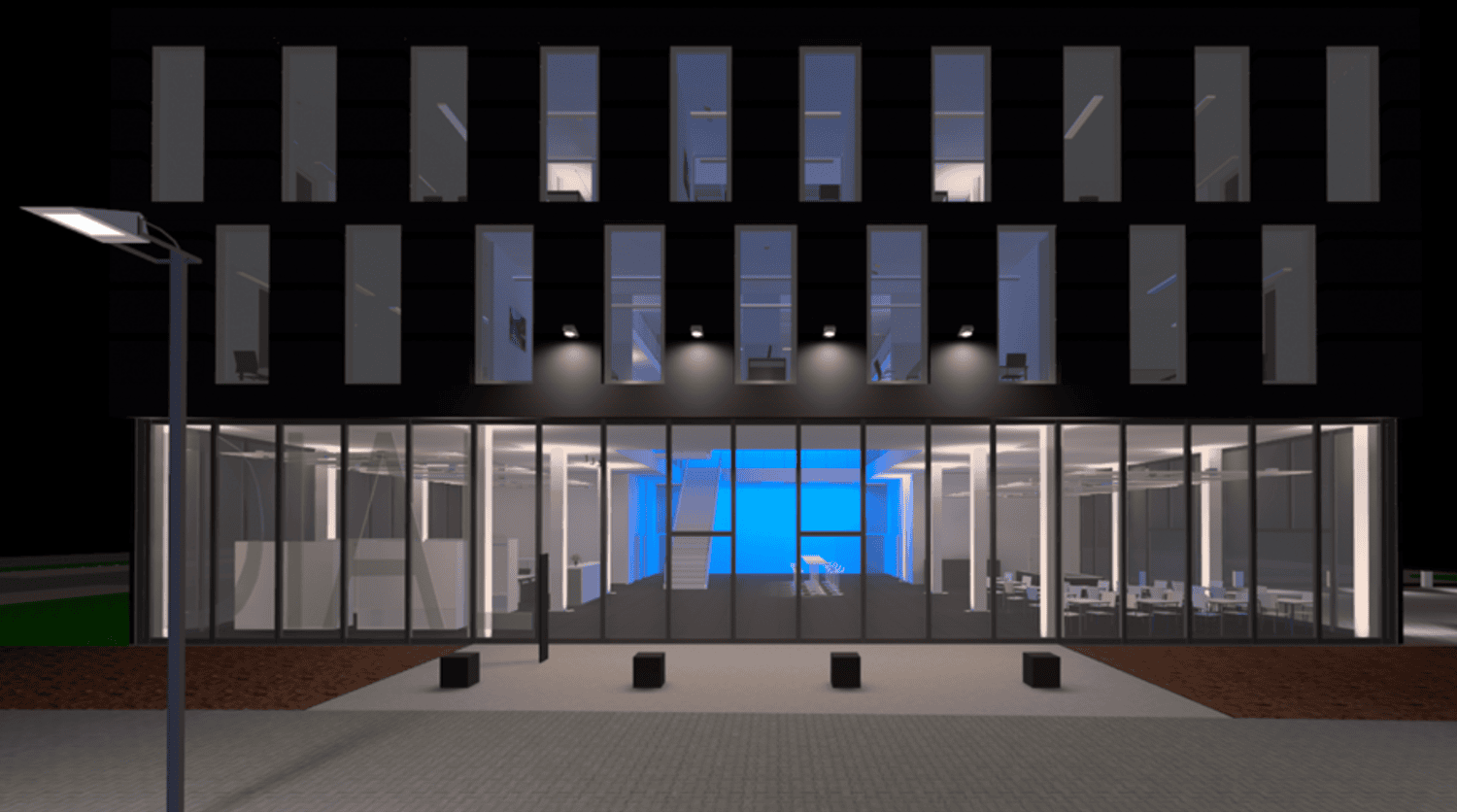
Introduction
When people think about sustainable buildings, they often think about insulation, solar panels, or energy efficiency. However, outdoor lighting is one of the most commonly overlooked aspects of sustainability. Poorly designed external lighting can cause glare, disturb neighbours, waste energy, and harm wildlife. Good lighting design, on the other hand, improves safety, comfort, and environmental quality—without using more light than necessary. Under BREEAM v7, Pol 04 – Reduction of Night-Time Light Pollution addresses exactly this issue by promoting a simple principle:
Use the right light, at the right place, at the right time.

What is BREEAM v7 Pol 04 ?
The credit assesses whether lighting:
- Is limited to where it is genuinely needed
- Is kept within appropriate brightness levels
- Avoids shining into neighbouring properties
- Minimises light spill into the night sky
The goal is not to reduce safety, but to avoid unnecessary or poorly directed lighting that causes environmental and community harm. In simple terms Pol 04 asks:
Is the building lighting its surroundings responsibly
Why Outdoor Lighting Matters
Excessive or badly designed lighting can lead to:
- Light shining into bedroom windows
- Glare that causes discomfort or reduced visibility
- Higher electricity bills
- Disturbance to bats, insects, and other wildlife
- Brightening of the night sky (sky glow)
Many developments struggle not because they lack lighting—but because they have too much lighting, used incorrectly, and left on for too long.
Pol 04 encourages a smarter approach: lighting that supports people without damaging the environment or surrounding community.

Why This Credit Is Important in the UK ?
In the UK, outdoor lighting is closely connected to:
- Planning approval
- Local authority requirements
- Environmental protection
- Neighbour and community impact
Local councils increasingly scrutinise lighting proposals, particularly near:
- Residential areas
- Suburban and rural sites
- Ecologically sensitive zones
Poor lighting can lead to:
- Planning conditions or delays
- Post-completion complaints
- Costly retrofit work
Addressing Pol 04 early helps demonstrate that a development is well-considered, compliant, and future-proofed.
How Envision Helps You Achieve Pol 04
At Envision, we help builders, developers, and investors achieve Pol 04 clearly, efficiently, and cost-effectively. You don’t need to understand technical lighting standards or software—that’s our role. We:
- Review the site location and surroundings
- Identify sensitive boundaries and neighbouring properties
- Analyse how light spreads at night
- Ensure lighting levels stay within acceptable limits
- Provide clear, compliant evidence for BREEAM and planning
We use professional lighting simulation software to model night-time conditions before construction, allowing issues to be solved early—saving time, cost, and risk.


What This Means for Builders & Developers
Achieve a recognised BREEAM credit
Pol 04 contributes directly to your project’s BREEAM score. It is a relatively straightforward credit when considered early and can improve sustainability performance without major design changes.
Reduce planning and compliance risks
Early lighting assessment helps prevent issues such as glare, light spill, or neighbour complaints—reducing planning delays and late-stage design changes.
Avoid over-specifying lighting (saving money)
Many sites are over-lit “just in case.” A targeted lighting strategy often reduces the number of fittings, lowering installation and running costs without compromising safety.
Deliver cleaner, more professional designs
Well-designed lighting improves the night-time appearance of a development, creating calm, high-quality environments that are better received by planners and communities.
Improve buildability and coordination
Clear lighting layouts and specifications reduce uncertainty on site and help contractors deliver the design as intended.
What This Means for Investors & Asset Owners
Stronger ESG and sustainability credentials
Pol 04 supports environmental and social responsibility, contributing to ESG reporting and sustainability-led investment decisions.
Better occupant and tenant satisfaction
Reduced glare and intrusive lighting improve night-time comfort for residents, staff, and visitors.
Lower long-term operating costs
Efficient lighting strategies use fewer fittings, efficient LEDs, and smart controls—reducing energy use and maintenance.
Future-proofed assets
As environmental standards tighten, developments that already address light pollution are better positioned to meet future expectations and regulations.
Benefits for the Community & Environment
Less disturbance to neighbours
Carefully controlled lighting prevents unwanted brightness entering nearby homes, improving community relations.
Safer and more comfortable outdoor spaces
Good lighting design improves visibility and safety without harsh or excessive brightness.
Protection for wildlife and biodiversity
Carefully controlled lighting prevents unwanted brightness entering nearby homes, improving community relations.
Reduced glare and sky glow
Limiting upward light preserves darker night skies, especially in suburban and edge-of-town locations.
Developments that are welcomed, not challenged
Respectful lighting design leads to smoother planning outcomes and better long-term reputation.
Technical Aspects

Candela
One of the basic measures of light is Luminance, also referred to as screen brightness. It is expressed in candelas per square meter (cd/m2). The candela, the SI unit of light intensity, is key in this context. Luminance tells us how bright an object or surface is. The higher the luminance value, the brighter the observed object.
Luminance is crucial in the design of various display devices, such as monitors, TVs, screens, digital displays, etc. For example, a typical computer monitor should have a luminance in the range of approx. 140-250 cd/m2, while a display intended for outdoor use should have a luminance of at least 1000 cd/m2. Screen brightness and cd/m2 are the key parameters here.
When designing display devices, it is very important to match the luminance to the brightness of the environment in which the display will operate. Too low a screen brightness in a bright environment will make the content on the screen unreadable. On the other hand, too much screen brightness in a dark room can tire the eyes and impede perception. Therefore, location and lighting conditions should always be taken into account when selecting a display.
For example, LCD displays installed in shopping malls should have a luminance of 500-750 cd/m2. Office monitors, on the other hand, only need to provide 150-300 cd/m2. Screen brightness and cd/m2 are also key here. It’s even different for in-vehicle displays – here you need luminance of 1,000 cd/m2 or more. Only then will the content be clearly visible regardless of the lighting conditions outside the vehicle.
Interestingly, looking through the technical data of smartphones, you can see that the higher-end models offer luminance even over 700 cd/m2. This is to ensure good readability of the display even in very bright conditions, such as in full sunlight. Cheaper smartphones, on the other hand, have to settle for a luminance of 300-500 cd/m2.
In summary, luminance is a key parameter of any electronic display. Its proper selection determines the readability and comfort of the device. The manufacturer, which offers a wide range of LCD displays with different luminance levels, is able to meet the needs of a variety of customers and applications.
Lux
Another important measure of light is light intensity, defined in lux (lx). One lux is the intensity of light falling on an area of 1 m2 from a light source of 1 lumen. In other words, light intensity tells us the amount of luminous flux falling on a given surface.
Light intensity is crucial when designing interior lighting. For example, a typical office should be illuminated with light of 300-500 lux, precision operations require 1000-2000 lux, and simple warehouse work even only 100 lux.
Properly designing the lighting in a room or space requires an in-depth analysis of what activities will be performed in it. A different light intensity will be required in a hospital operating room, where very bright light is needed to enable precise procedures, and another in an office, where the most important thing is to have a good view of documents and monitors, but without blinding employees.
Still another example would be production halls, where the light should enable efficient and safe work, but at the same time not tire the eyes during long hours of activity. In stores, on the other hand, lighting should display merchandise and encourage shopping. So you can see that choosing the right intensity and type of lighting depends on the specific purpose of the space.
Light Efficiency
To compare different light sources, in addition to luminosity, another measure is needed – luminous efficacy. It determines the ratio of the luminous flux emitted by the light source to the electrical power it consumes. The unit of luminous efficiency is lumens per watt (lm/W).
Luminous efficacy assesses how efficiently a light source converts electricity into light. For example, a typical incandescent bulb has an efficiency of approx. 15 lm/W, fluorescent lamp – 50-100 lm/W, and LED even more than 150 lm/W. Therefore, LED lamps are gradually displacing older technologies.
In an era of rising electricity prices and greater environmental awareness, more and more attention is being paid to the energy efficiency of lighting. That’s why more and more LED lamps are appearing on the market with record high efficacy reaching up to 200 lm/W. In addition, manufacturers are constantly improving LED technology, so that the latest LED lamps are able to provide the same amount of light as older technologies, using up to 4-5 times less electricity!
High luminous efficiency also means less heat emission from the lamp. As a result, smaller heat sinks are required to cool them, allowing LED lamps to be constructed in increasingly smaller sizes. This is especially important in lamps designed to be built into furniture, bookcases, light bars, etc. In summary, luminous efficacy, along with other parameters such as longevity and colour temperature, makes it possible to fully assess the properties of a given light source and select the optimal solution for your needs.
Colour temperature
The colour temperature of the light is A measure of the colour of the light they emit. It is defined in kelvins (K). The higher the colour temperature of the light, the bluer its colour. Candlelight, for example, has a temperature of approx. 1900 K, typical incandescent bulbs approx. 2700 K, fluorescent lamps 3000-6000 K, and sunlight as much as approx. 5500 K.
Proper selection of the colour temperature of light sources is important in many applications, such as lighting offices, stores, hospitals and operating rooms. A colour temperature that is too low can cause drowsiness and decreased productivity. In contrast, too high a temperature can cause visual fatigue and irritability.
For example, lamps with cool white light above 5,000 K are recommended for lighting office spaces, doctors’ offices, workshops requiring precision. Warmer shades of 3000-4000 K will work well in bedrooms, living rooms, reading rooms – anywhere a more cozy, homey mood is desired.
The colour temperature also determines the colour rendering of illuminated objects and spaces. Cool light will better reflect blue-green colours, while warm light will reflect red-orange colours. That’s why warm lamps are often used in clothing stores to highlight the colours of clothes. On the other hand, in vegetable gardens it is better to present vegetables and fruits in a light closer to daylight.
In summary, the colour temperature of light significantly affects the ambience and functionality of lit rooms and colour perception. Its conscious choice allows you to create a space optimally adapted to its purpose and the preferences of its users.

Our Role
At Envision, we manage all of this technical assessment on your behalf—translating complex standards and guidance (such as those issued by the Institution of Lighting Professionals) into clear, buildable, and compliant solutions.
You benefit from:
- Reduced risk
- Clear evidence for approvals
- Better-performing developments
Environmental Lighting Zones (E0–E4)
Environmental zones define how sensitive an area is to night-time lighting. For example:
- E1 zones are typically rural or very dark areas
- E2 zones are suburban
- E3 zones are urban
The darker the area, the stricter the lighting limits. Correctly identifying the lighting zone is one of the most important first steps, as it determines the maximum allowable lighting levels for the site.
Vertical Illuminance (Lux at Boundaries)
This measures how much light reaches vertical surfaces, such as:
- Neighbouring windows
- Site boundaries
- Adjacent buildings
Excessive vertical illuminance can cause discomfort or disturbance to neighbours. Pol 04 sets maximum limits to ensure light does not spill unnecessarily beyond the site.
Light Intensity (Candela)
Candela is a measure of how intense a light source appears in a specific direction. Even efficient lights can cause glare if their intensity is poorly controlled.
By limiting light intensity in sensitive directions, glare is reduced and visual comfort is improved—especially for nearby residents and pedestrians.
Upward Light Ratio (ULR)
Upward Light Ratio refers to the percentage of light that escapes upwards into the sky.
- High upward light levels contribute to:
- Sky glow
- Loss of dark skies
- Ecological disruption
BREEAM encourages the use of full cut-off luminaires and careful aiming to keep upward light to an absolute minimum.
Glare Control
Glare occurs when light is too bright or poorly directed, causing discomfort or reduced visibility. Good glare control ensures:
- Comfortable night-time environments
- Improved safety
- Reduced complaints
This is achieved through correct luminaire selection, mounting height, and orientation.
Lighting Controls (Timers, Sensors & Dimming)
Pol 04 also considers how long lights stay on. Controls such as:
- Timers
- Motion sensors
- Dimming during low-use hours
Ensure lighting is only used when needed—supporting energy efficiency and reducing unnecessary night-time disturbance.
Why This Technical Detail Matters
These technical checks ensure that outdoor lighting is:
- Safe for users
- Respectful of neighbours
- Efficient in operation
- Environmentally responsible
By addressing these factors at design stage, projects are far more likely to achieve smooth planning approval, BREEAM compliance, and long-term performance.
Our philosophy
At Envision, our philosophy is grounded in the belief that truly sustainable design is not about adding layers of complexity—it is about making better decisions, earlier in the process. We approach sustainability as a strategic design tool, not a box-ticking exercise. Every recommendation we make is guided by a balance of environmental responsibility, technical compliance, commercial viability, and real-world buildability. When it comes to external lighting and BREEAM v7 Pol 04, this philosophy translates into a simple but powerful principle:
- Right light.
- Right place.
- Right time.
This means:
- Providing illumination only where it is genuinely required
- Designing lighting levels that are appropriate to the site context
- Ensuring lighting operates only when it delivers real benefit
We believe well-designed lighting should enhance safety and usability without disturbing neighbours, harming wildlife, or wasting energy. Our role is to support project teams by translating complex standards and guidance into clear, practical design strategies that can be confidently delivered on site. By addressing lighting performance early, we help reduce risk, avoid unnecessary cost, and create developments that perform well throughout their lifecycle.
Ultimately, our philosophy is about responsible development—creating buildings and places that respect their surroundings, meet regulatory and investor expectations, and contribute positively to the communities they serve. This is how Envision delivers sustainability that is not only compliant, but credible, efficient, and enduring.
Other Articles
October 14, 2025
Envision’s BREEAM in Use Market Position
Envision is a leading provider of BREEAM in Use assessments with the UK. We provide quality advice…
October 13, 2025
Carbon Footprint Report and Reduction Plan 2024-25
We are pleased to release our 2024-2025 Carbon Footprint Report and Reduction Plan. This marks the third…

April 8, 2025
Envision welcomes Chris Heyworth to the Board as non-executive director
As a leading provider of sustainability and net zero advisory services, Envision has experienced significant growth. In…