


The 2015 Paris Agreement on climate change calls for holding eventual warming “well below” 2°C, and for the pursuit of efforts to limit the increase even further, to 1.5°C. To achieve this, every individual, company and industry has a role to play.

In the UK, the Whole Life Carbon Roadmap produced by the UK Green Building Council (UKGBC) illustrates that the UK built environment is currently responsible for (i.e. has direct control over), 25% of total UK greenhouse gas emissions (from buildings and infrastructure). If surface transport (i.e. vehicle emissions) is included within the scope of the built environment, the total contribution to UK emissions increases to 42%.
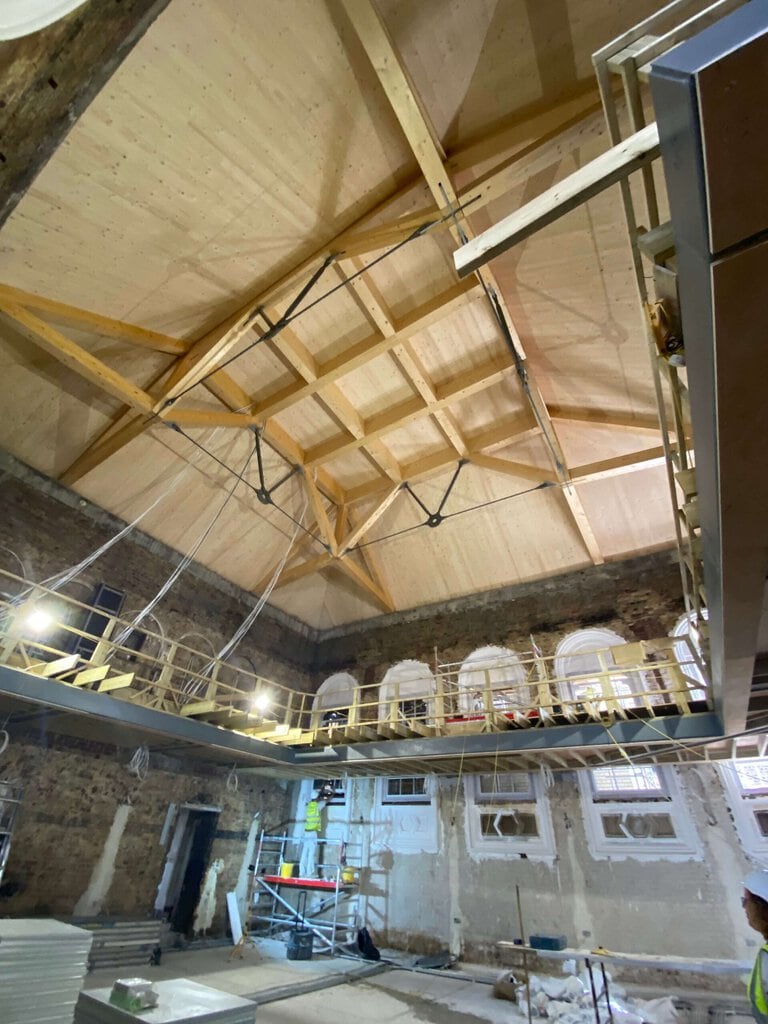
Within the built environment, every material used in the construction or refurbishment of a building has a carbon impact, as do the activities associated with its construction, including transport to site and energy used through construction. Taken together, all carbon emissions associated with the construction of a building are referred to as ‘embodied carbon’. Research by the UKGBC shows that in many cases, embodied carbon accounts for up to 75% of the carbon associated with a building over its lifetime
But in many cases, embodied carbon remains a blind spot, with designers and developers unaware or unsure how to approach it, design for it, and reduce it. This ‘knowledge gap’ is a complex issue to address.
Envision have developed this guide to begin closing that gap.
Building on robust data derived from manufacturer’s Environmental Product Declarations (EPDs), this guide has been developed as a resource for stakeholders involved in the design, construction and refurbishment of buildings, to enable them to begin understanding and comparing the ‘construction stage’ embodied carbon impact of different design options and building materials.
We believe the more aware that all stakeholders are regarding the carbon impact of building materials, the sooner robust reduction and mitigation practices can be embedded into everyday building design, construction and refurbishment.
This does not replace the important Life Cycle Assessment work required as part of a robust carbon reduction strategy, but is meant as a ‘first step’ guide to make this complex topic more accessible, approachable and user-friendly.
With it, we hope all stakeholders in the built environment can begin considering the carbon impact of the design decisions and material choices they make, as we all seek to address the climate challenges facing the built environment.
Other Articles

July 21, 2026
Using CRREM Analysis to Manage Real Estate Transition Risk
Real estate owners are facing increasing pressure from regulators, lenders, and occupiers to align their portfolios with…
July 16, 2026
BRE launches new BREEAM Refurbishment and Fit Out v7 Guidance
Following the launch of BREEAM New Construction v7, the long awaited update to the BREEAM Refurbishment and…
July 14, 2026
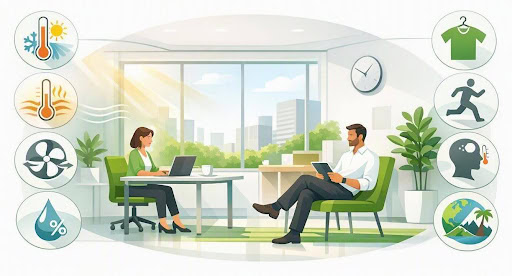
Why Thermal Comfort Matters in Building Design
This is the first in a series of posts from Envision exploring what shapes thermal comfort in…