


Prepared by: Alexandra Bryant-Ward and Dale Homewood.
As expert leaders in delivering BREEAM Residential assessments, Envision supports clients and design teams with insightful guidance, proactive solutions and a keen ability to identify efficiencies ensuring a successful and streamlined delivery. The following article reports the key insights which we at Envision have identified in order to facilitate the successful delivery of BREEAM Residential assessments.
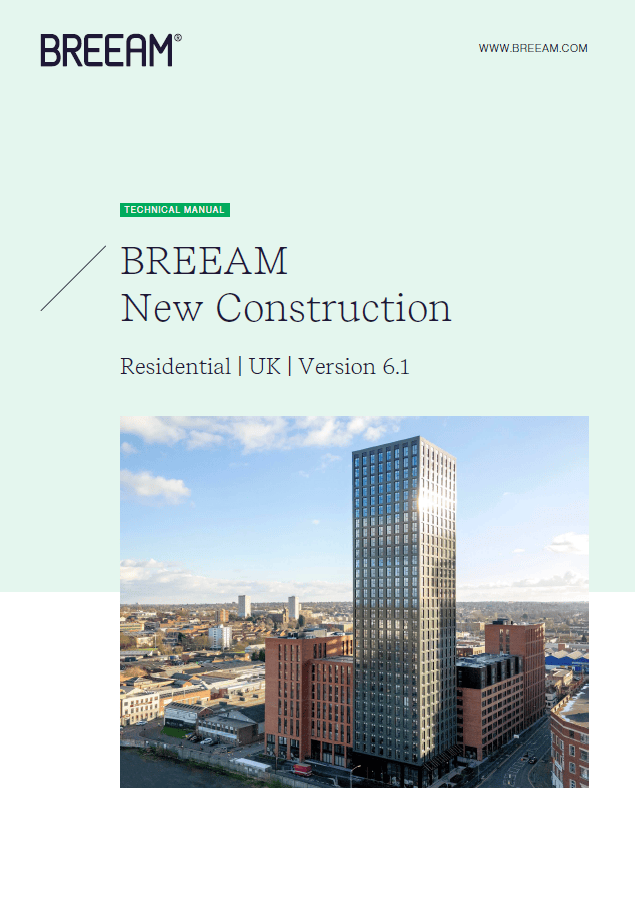
BREEAM Residential (formerly Home Quality Mark ‘HQM’) is a certification scheme for new residential homes, assessing the sustainability quality and wellbeing performance. The criteria offers a clear, science backed, reliable way to demonstrate that a design has prioritised key areas such as energy, comfort, security, resilience, and outdoor space.
As the Build to Rent (‘BtR’) market continues to grow rapidly, we at Envision came together to reflect on key milestones achieved across our leading residential schemes. Working in partnership with renowned residential clients including McLaren and Heim, we reflected upon our experience and identified key insights and effective ways of how best to enhance the delivery of BREEAM Residential assessments.
Key Insights
1. Early Engagement and Planning
Whether an assessment is required solely for planning and/or will be delivered by another party entirely, our key recommendation would be to appoint a BREEAM assessor as early as possible in order to ensure a clear strategy is established, reflective of the approach to design and construction.
The reason for this recommendation is centred around:
- The BREEAM target;
- Responsibilities and appointments;
- Early stage credits and maximising value;
- Integration of sustainability measures in the design; and
- Project programme.
The BREEAM target will determine how many credits the team need to pursue in order to obtain the required rating. This process will need to be facilitated by a BREEAM Assessor to ensure mandatory credits are captured in line with the BREEAM rating, as well as reflect the scope of works being completed by the design team.
Envision will advise on responsibilities and additional appointments required, as well as the supporting evidence and information which will need to be provided throughout this process. Credits will be reviewed and it will be agreed with the design team who is responsible for the delivery of each item at the required time.
In addition to the above, BREEAM requires particular actions and evidence to be issued at select stages to ensure the information acquired throughout these process is able to inform the design teams decision making process, as well as be captured within the design at the appropriate stage.
Examples of Pre-Stage 2 credits can include:
- 2.1 Identifying ecological risks and opportunities: Ensuring Project team liaise and collaborate with stakeholders to identify, appraise and agree actions for the project that will achieve optimal ecological outcomes e.g., mitigation, protection and enhancement measures prior to works commencing.
- 3.3 Security: Appoint a Suitably Qualified Security Specialist to develop a set of recommendations or solutions to incorporate into the design.
- 6.3 Life cycle costing: Undertake a life cycle cost (LCC) analysis to inform the occupant on key maintenance and operational costs.
At Envision we work closely with teams to identify the early-stage deliverables and key priorities, ensuring all BREEAM deliverables are accounted for from the outset. We ensure these align with other early project activities e.g., planning applications, to support and coordinate a streamlined approach.
The Project Programme is the final primary factor informing the strategy in relation to Early Engagement and Planning for a successful delivery. The programme informs Envision, as the BREEAM assessor, on the various design phases, signifying when particular actions e.g. Early Stage actions must be completed, as well as anticipate when key decisions and appointments are to be made and finally plan for major activities such as Demolition. By understanding this information we can coordinate with the team timings for evidence reviews, outline when actions are required to be undertaken, mitigate potential risks of items being missed, and ensure the team’s actions in terms of BREEAM delivery are prioritised and manageable throughout the key phases.
2. Design Team Expertise
Over the past couple of years, we have seen significant rise in sustainability knowledge across the teams we collaborate with; however practical knowledge of the specifics of BREEAM Residential is still developing, as this is still a relatively new methodology.
Understanding the team’s knowledge and experience helps us as assessors understand where we can help facilitate and collaborate together, to ensure we are set-up for a successful process.
To determine the level of BREEAM input required for assessments, we attend key meetings e.g., initial kick-off meetings, general design team meetings, target setting workshops as well as risk and opportunities reviews. In addition to this, we prioritise workshops and 1-1 meetings with the team members to ensure BREEAM sessions remain personalised to the team members, facilitate collaboration, and ensure opportunities for early intervention can take place sooner rather than later, thus mitigating risks.
This approach helps us in determining level of collaboration required throughout the team and informs us on potential limitations and where our efforts and knowledge maybe best directed.
In terms of assistance we provide in relation to BREEAM assessments at Envision, we have the technical knowledge and capabilities to assist across all areas of the assessment process. This includes providing additional services such as the following:
- Building Life Cycle Assessment (‘LCA’)
- Adaptation to Climate Change appraisal
- Sustainable Procurement Plans
- Passive Design Analysis
- Low Zero Carbon Feasibility Studies
- Pre-Demolition Audit
- Energy Performance Certificates
- Energy Strategies, and
- Thermal Comfort reports
Understanding the level of knowledge within the design team, as well as acknowledging the challenges faced on previous projects, enable us to refine our approach and ensure our efforts are directed appropriately . This helps mitigate potential unforeseen issues and ensures both our team and the project team are set up effectively for success.
3. Procurement Route
Understanding the Project Procurement strategy (i.e. whether it is a Design and Build (‘D&B’) or Traditional Procurement), helps to determine the best suited approach we take as assessors – influencing how we target credits, allocate credit responsibility, and finally determining timescales as to when information will be ready.
The key information and actions we require to be instigated are outlined below:
- Early engagement of BREEAM assessor;
- BREEAM Assessors involvement at key meetings;
- Confirmation of the immediate team appointed and their scope of works; and,
- Project programme
These actions are important as it helps Envision ensure the appropriate members of the design team are aware of the BREEAM requirements, what needs to be actioned and at what stage these actions occur. As already mentioned, early engagement ensures the correct approach is followed from the outset in terms of addressing early credits and allocating responsibilities. Ensuring transparency and clarity on future appointments, programme, and participation in and / or correspondence from key design team meetings, enables a well-defined BREEAM strategy to be developed and implemented reflective of the design team’s scope.
The key difference between Design and Build and Traditional Procurement in relation to BREEAM is the responsibility allocation. Under a Design and Build procurement strategy, credit responsibilities are shared between the core Design Team and future Principal Contractor, whereas Traditional Procurement ensures the Design Team maintain full responsibility throughout the design programme. Allocating correct responsibility and understanding the procurement strategy becomes a key mechanism in the delivery of BREEAM for the projects and ensuring all targeted credits are undertaken and achieved.
A clear understanding of the Procurement Route, as well as engaging the BREEAM assessor early ensures the following:
- Well-defined BREEAM strategy is established reflective of the scope of works and the sustainability goals of the project;
- Design Team responsibility is allocated and understood from all parties; and,
- Improved likelihood of successful delivery of BREEAM.
If you are interested in hearing more about our services to deliver successful BREEAM Residential assessments, please get in touch via contact@envisioneco.com.
Other Articles

July 21, 2026
Using CRREM Analysis to Manage Real Estate Transition Risk
Real estate owners are facing increasing pressure from regulators, lenders, and occupiers to align their portfolios with…
July 16, 2026
BRE launches new BREEAM Refurbishment and Fit Out v7 Guidance
Following the launch of BREEAM New Construction v7, the long awaited update to the BREEAM Refurbishment and…

July 14, 2026
Why Thermal Comfort Matters in Building Design
This is the first in a series of posts from Envision exploring what shapes thermal comfort in…