

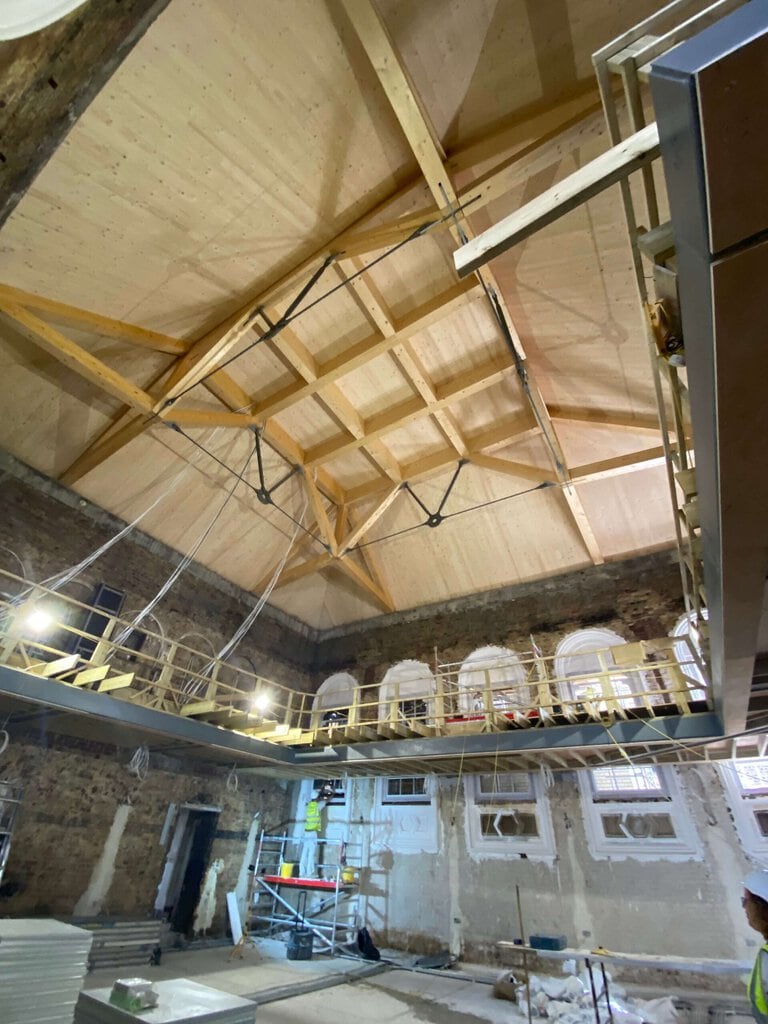
Following the launch of BREEAM New Construction v7, the long awaited update to the BREEAM Refurbishment and Fit Out technical standards have been released today (July 15th). Whilst opening date for registration for these standards is still to be confirmed (expected later this summer), Charlotte Brewin of Envision, one of our lead BREEAM RFO Assessors, has done a deep dive into the new requirements.
In summary, the headlines are:
- Separate BREEAM Refurbishment and BREEAM FitOut manuals
- New Resilience Category
- Significant Updates to bring in line with New Construction v7
- Mixed Use Buildings no longer require separate assessments
Separate Refurbishment and Fit Out Manuals
Reasoning
The sustainability requirements for major refurbishments can differ significantly from the fit out phase of a new development or a new tenant. BRE has recognised that it is better to have two separate methodologies, with two separate focuses:
- BREEAM Refurbishment V7 covers building upgrades that may include changes to the fabric, structure, core building systems and operational performance of an existing asset. It is typically used where work extends beyond individual spaces to improve the overall building’s performance and longevity.
- BREEAM Fit Out V7 is designed for tenant-led or interior focused projects where the wider building structure and core systems are not being significantly altered. It concentrates on interior spaces within a building, including layouts, finishes, furnishings and localised services.
Practical Implications for Our Clients
- Understanding the scope of works and different BREEAM requirements has always been important for a BREEAM RFO assessment, and this heightens in importance as we need to make sure we’re registering the assessment under the correct methodology from the outset.
- It is worth noting that where major refurbishment include the fit out in their scope, these can still be assessed under one assessment, using the BREEAM Refurbishment methodology.
New Resilience Category
Reasoning
As reflected in the UK Green Building Roadmap for Climate Resilience, the importance of ensuring existing buildings are resilient and adaptable to the changing climate has significantly increased. Climate change is here in the UK, and the consequences are already being experienced. Investors and Fund Managers are placing greater emphasis on the understanding of physical climate risks as part of investment decisions, due to the impact on performance and operational costs over the long term.
BRE has introduced this standalone category that brings together themes that were addressed separately and enhanced the requirements to focus on the overall building’s resilience to physical climate risks such as flooding, heat, drought, storms and wildfire.
Practical Implications for Our Clients
- Focus is on building specific risk assessments
- Bringing in expertise to advise on physical climate risks and adaptation measures, aligned with IFRS S2 (historic TCFD recommendations)
- Considerations of what is feasible for existing buildings, with heritage and other constraints
Significant Updates to bring in line with New Construction v7
Reasoning
The current BREEAM Refurbishment and Fitout assessment methodology is from 2014, and was the first time a separate methodology for this type of development had been published. Since then, there has been a significant shift in the requirements for sustainable refurbishment, including a stronger focus on the reuse and refurbishment of commercial buildings as an better alternative to new construction.
The new BREEAM Refurbishment and Fitout assessment methodologies place a strong emphasis mitigating the impacts of climate change, as well as ensuring buildings are adapting to the changing climate (as referenced above).
Practical Implications for Our Clients
- This update to BREEAM RFO is well overdue but subsequently will be even more of a step change in requirements than the changes we’ve recently seen for New Construction from v6.1 (2018) to v7.
- Key technical changes need to be considered early in the project planning phase, to ensure maximum credits are achievable. These include:
- Expanded scope of Whole Life Carbon Assessments (previously only an exemplary part of RFO 2014)
- Benchmarking of both operational and embodied carbon assessments
- Enhanced focus on Health and Wellbeing, more in line with BREEAM New Construction
- More stringent biodiversity requirements
Mixed Use Buildings No Longer Require Separate Assessments
Reasoning
BRE has recognised the practical and commercial disadvantages of having to complete multiple assessments for different building uses on one building, and the importance of focusing on the sustainability of the whole development.
Practical Implications for Our Clients
- Up to a maximum of 5 different asset types can now be assessed within one single building assessment
- This doesn’t apply to mixed refurbishment and new build however, which currently still require a bespoke assessment (Envision is pushing BRE to get this resolved asap!)
Next Steps
We await confirmation of the opening of registrations later this summer. Once this date ha been confirmed, there will then be a 3 month transition period, where projects can still be registered under BREEAM RFO 2014 or the new v7.
Envision is happy to come and talk about this latest update of BREEAM RFO v7 and the implications on projects. Get in touch to book a CPD and / or discuss a specific requirement.
Also if you have any current projects that you’d prefer to be assessed under the current BREEM RFO 2014 version, please get in touch more urgently so you don’t miss the cut off date for registration later this year!
Other Articles
October 13, 2026
BREEAM In-Use in the Industrial Sector: Its Importance and Role in Sustainability
What is BREEAM In-Use? BREEAM (Building Research Establishment Environmental Assessment Method) In-Use (BIU) is an online assessment…

September 11, 2026
Envision Carbon Impact Report 2025-2026
Our Carbon Footprint Report for the financial year 2025-26 is now finalised and marks our fourth full…

July 21, 2026
Using CRREM Analysis to Manage Real Estate Transition Risk
Real estate owners are facing increasing pressure from regulators, lenders, and occupiers to align their portfolios with…